Have you heard the term “topical authority” in SEO discussions? It explains how to evaluate a website’s expertise and credibility on a particular subject or topic.
When a site consistently publishes useful, relevant content on a single topic, it becomes easier for search engines to understand what the site is about. Over time, this consistency of entity-based SEO helps build credibility and improve visibility across traditional search engines and AI-driven platforms such as ChatGPT, Claude, and Perplexity.
In this detailed guide, we’ll explain what topical authority means, why it matters, and how to build topical authority to improve your SEO. Ready to boost your authority to uplift your website visibility? Let’s get started!
What is Topical Authority?
Topical authority refers to a website’s ability to demonstrate expertise on a specific subject. It focuses on becoming a trustworthy source of information on a specific topic by providing in-depth coverage through interconnected topics.
In simple terms, topical authority is built by covering a subject in depth instead of publishing scattered content. A people-first, intent-driven content strategy that answers specific user questions rather than relying on keywords alone to help establish clear topical authority.
Benefits of Using Topical Authority for SEO
The real benefits are that it helps users and search engines better understand the site’s relevance, which can support improved rankings.
- To understand this concept, consider content SEO.
- Publishing SEO-optimized content is not enough to establish expertise.
- This is a broad and competitive topic that cannot be fully addressed within a single piece of content.
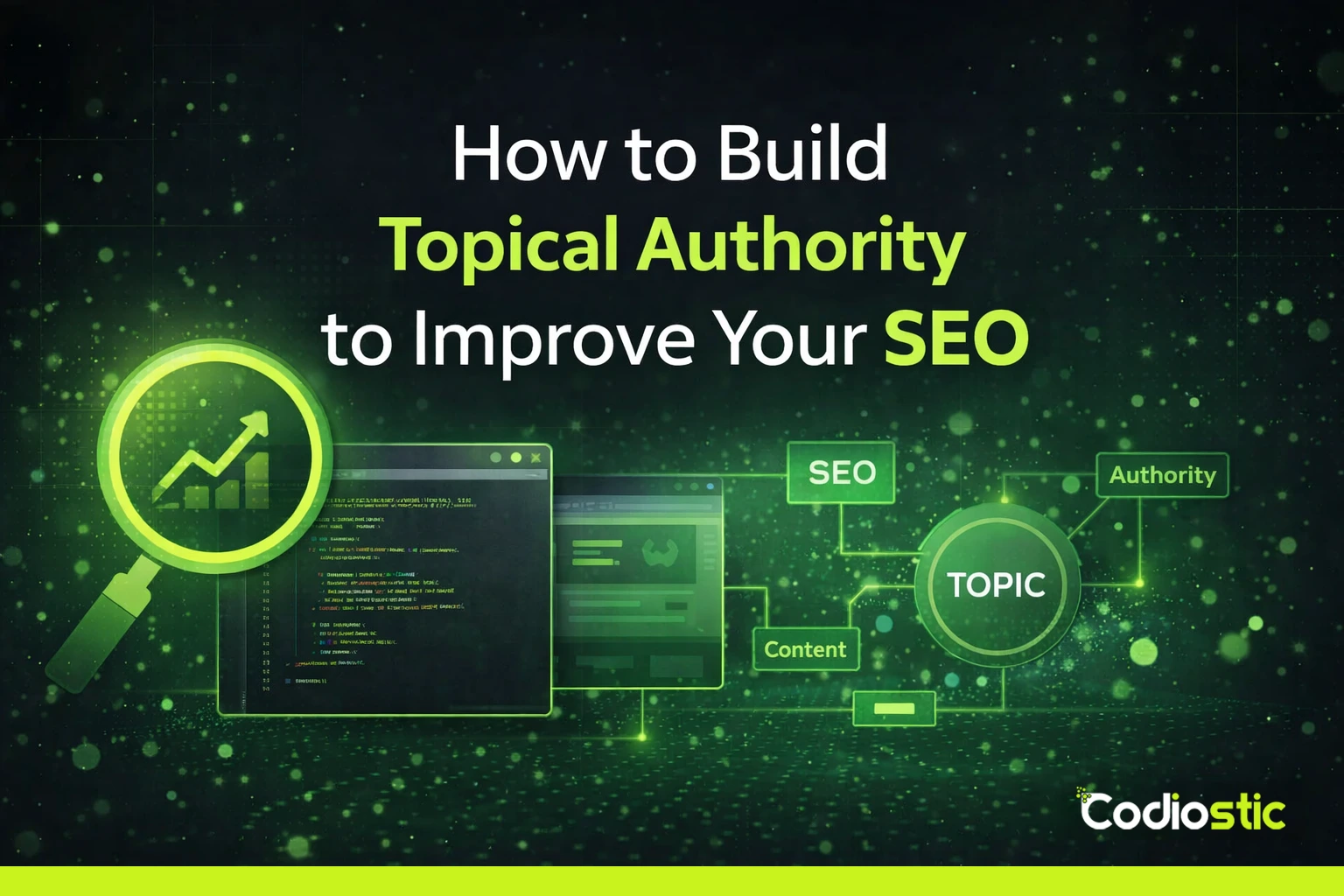
Topical authority is built by creating multiple pieces of content that thoroughly explore the topic. Using a topical authority map, you build a pillar page or content hub around a core topic and support it with cluster content for related subtopics. This structure is also called content clusters or a content pillar (pillar-cluster model).
Why Topical Authority Matters for SEO
Topical authority plays an important role in SEO by helping search engines understand a website’s expertise on a subject. When a site consistently covers a topic in depth, it is more likely to rank for related keywords or queries and appear more prominently in search results, including AI-driven answers like Google AI Overviews.
This structured approach also helps optimize content for AI search results, because nowadays Google is shifting from the “Keyword Era” to the “Entity Era.
- Building topical authority in SEO can increase organic traffic by enabling a site to rank for more long-tail keywords and related queries. Visitors who arrive through these searches are often more relevant and engaged.
- It can also support natural backlink growth. When the content cluster strategy is thorough and reliable, other websites are more likely to reference it, which further improves search visibility and trust signals.
- In addition, strong topical authority helps improve brand credibility. Websites that frequently appear in topic-related search and semantic search results are more likely to be perceived as knowledgeable and trustworthy.
- Topical authority also aligns closely with Google’s E-E-A-T principles (Experience, Expertise, Authoritativeness, and Trust).
By following a modern SEO strategy and consistently publishing accurate, well-structured, and helpful content on a topic, you can reinforce these quality signals.
There is no single metric to measure topical authority. Still, common indicators include extensive keyword rankings, strong internal linking between related content, and recognition from search engines and AI platforms as a reliable source.
How to Build Topical Authority
Building topical authority involves organizing your content around clear themes and covering each topic in depth. This structured approach is commonly used by businesses offering the best SEO services to improve search visibility and long-term rankings.
1. Review Existing Content
Start by auditing your current content to determine how to create topic clusters from existing pages. Identify articles that can be updated, expanded, or grouped, especially those with declining performance or rankings just outside the top results.
2. Conduct Keyword Research
For each topic or content pillar, research relevant keywords and related questions. Pillar content strategy focuses on long-tail keywords and common user queries to identify gaps and opportunities for new content that fits naturally within each cluster.
3. Organize and Plan
Group content by topic and create a simple plan that outlines priorities, timelines, whether content is new or updated, target keywords, and internal linking opportunities. This helps keep execution consistent and focused.
4. Create and Optimise Content
Develop broad pillar pages that introduce the main topic, then support them with more detailed subtopic content. Ensure content is accurate, useful, and aligned with E-E-A-T principles. Internal and external links should be added where relevant.
5. Reinforce Internal Linking
Using internal linking for topical authority is essential. Knowing how to use internal linking for topic authority allows you to connect related pages within the same topic cluster, helping search engines better understand content relationships and distribute authority across your site.
Key Strategies for Building Topical Authority
You have to follow this smart planning strategy for both the website’s content and layout.
| Strategy | Description |
| Content Planning | Plan content topics and site structure together to ensure clear topical coverage. |
| Comprehensive Content | Create in-depth pillar pages supported by detailed articles that address subtopics, FAQs, and related themes. |
| Content Clusters | Organize content using a hub-and-spoke model, with a central pillar page linked to relevant supporting pages. |
| Consistent Publishing | Publish high-quality content regularly to keep the topic current and relevant. |
| E-E-A-T Signals | Demonstrate experience, expertise, authoritativeness, and trustworthiness through accurate content, credible authorship, and citations. |
| Backlinks | Gain links from reputable, topic-related websites to boost authority and trust |
How Google’s Algorithm Evolution Supports Topical Authority
Google aims to deliver the most relevant, helpful, and trustworthy search results. As a result, it consistently prioritizes content from knowledgeable, reliable, and experienced sources.
Major Updates that Shaped This Shift:
Over the years, Google’s algorithm updates have reinforced this focus, gradually pushing topical authority to the forefront.
- 2011 – Panda Update: Targeted low-quality, thin, and copied content that provided little value to users.
- 2013 – Hummingbird Update: Introduced semantic search and semantic SEO, enabling Google to better understand search intent, context, and relationships between topics beyond keywords and links.
- 2022 – Helpful Content Update: Google expanded E-A-T to E-E-A-T, adding Experience to reward firsthand knowledge, and demoted low-quality content.
- 2023 – Second Helpful Content Update: Further prioritized helpful, original, experience-driven content and reduced visibility for thin, duplicate, and mass-produced AI content.
- 2024 – Core Integration: The Helpful Content system was fully integrated into Google’s core ranking systems, with multiple signals now evaluating content helpfulness.
- 2026 – Discover Core Update: A broad content improvement to how articles are surfaced in Google Discover. Testing indicates that users will find the experience more useful and engaging.
Together, these updates reflect Google’s ongoing effort to surface content that demonstrates depth, expertise, and real-world experience.
Wrap Up
In a world where search engines and AI increasingly value relevance, expertise, and experience, investing in topical authority is one of the most effective strategies for long-term visibility, credibility, and growth.
Topical authority is no longer optional; it’s a critical factor in SEO and digital marketing success. By consistently covering a subject in depth, structuring content clusters for SEO, and demonstrating expertise, experience, and trustworthiness, you signal to both search engines and users that your site is a reliable source of information.
Building topical authority requires a semantic SEO strategy that focuses on planning, consistency, and content quality. By auditing existing content, researching keywords, creating structured topic clusters, and establishing strong internal links, you can improve SEO performance and establish your brand as a trusted resource in your niche.
Frequently Asked Questions
1. What is topical relevance?
Topical relevance refers to how closely a website’s content relates to a specific subject. Search engines use it to evaluate how well a page matches a user’s search query based on factors such as content depth, keywords, and backlinks.
2. What is semantic SEO, and how does it support topical authority?
Semantic SEO focuses on optimizing content for context rather than exact keywords. Using related terms and covering topics comprehensively, it helps search engines recognize your content as authoritative and strong topical authority.
3. What is the difference between topical authority and domain authority?
Topical authority shows how credible and in-depth a page or site is within a specific niche, while domain authority represents a website’s overall trustworthiness, based on content quality, high-quality backlinks, site structure, and trust signals.
4. Is topical authority more important than backlinks?
Both matter, but topical authority is becoming more important. Search engines like content that shows depth and relevance in a topic, and while backlinks still signal trust, they are far less effective without strong topical authority.
5. Does updating old content help strengthen topical authority?
Yes, updating old content improves accuracy, adds new insights, and ensures comprehensive coverage of a topic. This signals to search engines that your site is actively maintaining relevant, authoritative content, which strengthens your topical authority over time.